
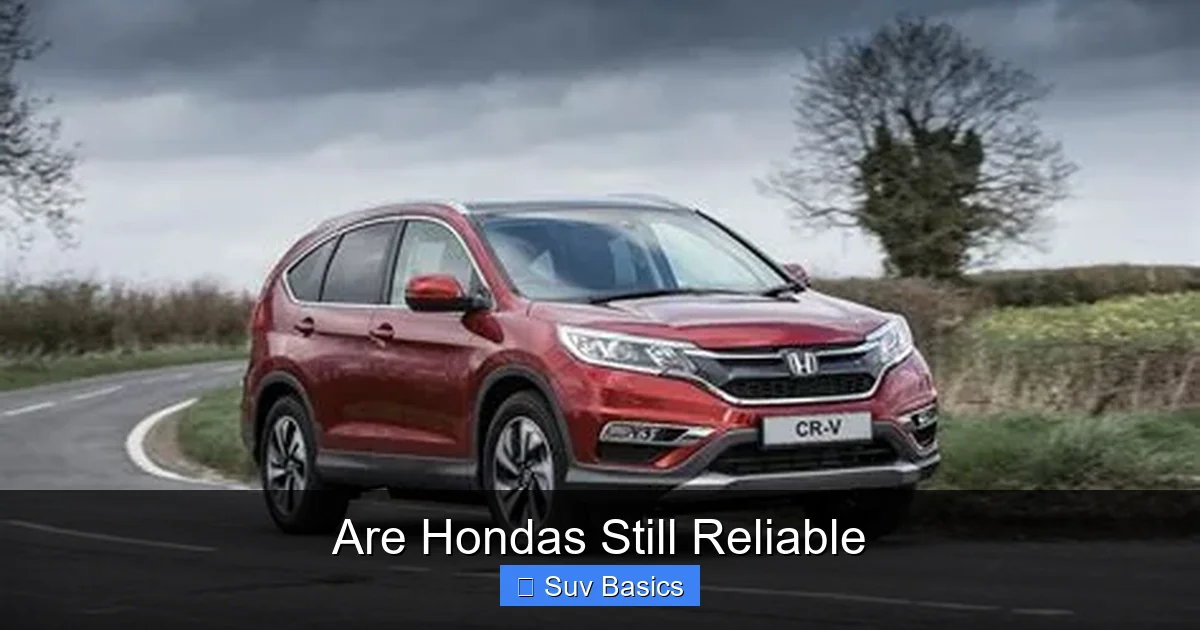
Hondas are still highly reliable, consistently ranking among the top brands for durability and low maintenance costs. With strong engine performance, excellent resale value, and a reputation built over decades, Honda SUVs and cars continue to earn consumer trust.
Key Takeaways
- Hondas maintain top reliability ratings: Consistently praised by J.D. Power, Consumer Reports, and other industry experts for long-term dependability, reflecting the broader SUV evolution.
- Strong resale value: Honda vehicles, especially SUVs like the CR-V and Pilot, hold their value better than most competitors, similar to how luxury SUVs retain value.
- Fuel-efficient and practical: Honda’s focus on efficient engines and smart design makes them ideal for daily driving and long trips, much like a hybrid SUV.
- Low cost of ownership: Routine maintenance is affordable, and major repairs are less common compared to many other brands.
- Advanced safety features: Honda Sensing suite comes standard on most models, offering collision mitigation, lane-keeping assist, and more.
- Proven track record: Decades of engineering excellence and real-world performance back Honda’s reliability claims.
- Wide service network: With dealerships across the U.S. and globally, getting service or parts is rarely a problem.
📑 Table of Contents
- Are Hondas Still Reliable? A Deep Dive into Honda’s Enduring Reputation
- Honda’s Longstanding Reputation for Reliability
- Honda SUVs: Reliability Meets Practicality
- Fuel Efficiency and Cost of Ownership
- Safety and Technology: Honda Sensing and More
- Honda vs. the Competition: How Do They Stack Up?
- Tips for Keeping Your Honda Reliable for Years
- Conclusion: Yes, Hondas Are Still Reliable—and Here’s Why
Are Hondas Still Reliable? A Deep Dive into Honda’s Enduring Reputation
When it comes to buying a vehicle, few factors matter more than reliability. You want a car or SUV that starts every morning, handles your daily commute without drama, and lasts for years—ideally without breaking the bank on repairs. For decades, Honda has been synonymous with dependability. But in a rapidly evolving automotive market filled with new tech, electric options, and shifting consumer expectations, you might wonder: Are Hondas still reliable?
The short answer is yes—Hondas remain one of the most reliable brands on the road today. Whether you’re eyeing a compact CR-V, a family-friendly Pilot, or even a used Accord, Honda’s reputation for building long-lasting, low-maintenance vehicles continues to hold strong. But let’s dig deeper. What makes Honda stand out in 2024 and beyond? And how do they compare to competitors in the SUV and sedan markets?
Honda’s Longstanding Reputation for Reliability
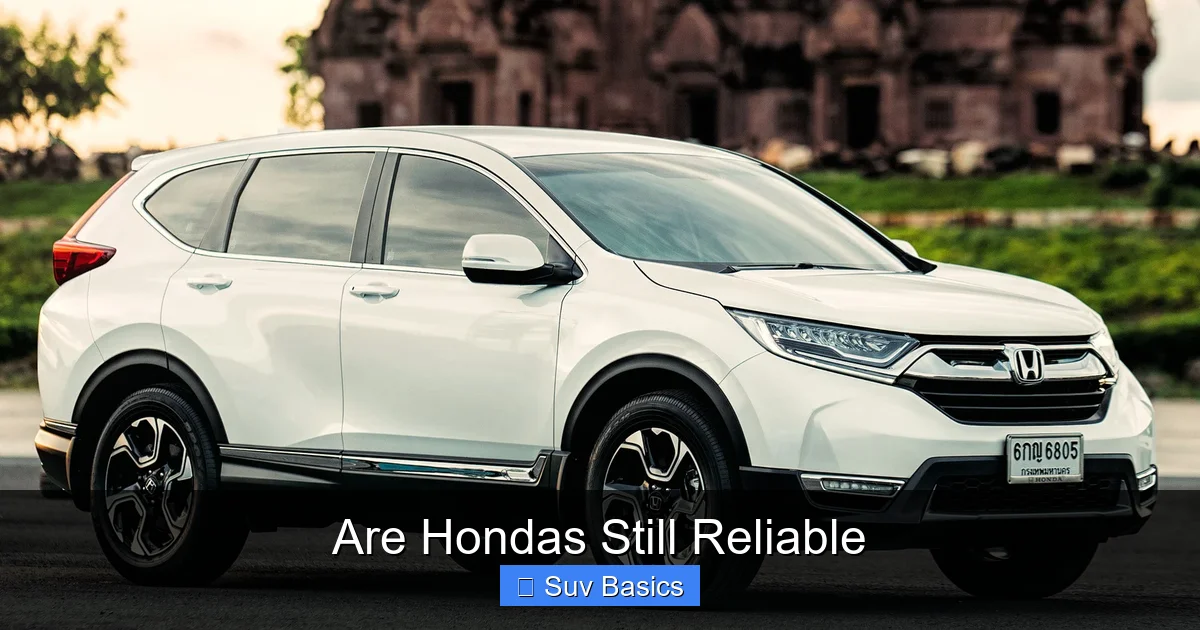
Visual guide about Are Hondas Still Reliable
Image source: slashgear.com
Honda didn’t earn its reputation overnight. Since the 1970s, the brand has focused on engineering simplicity, durability, and fuel efficiency. The original Honda Civic, for example, became a global hit not because it was flashy, but because it was affordable, easy to drive, and—most importantly—didn’t break down. That philosophy still guides Honda today.
Over the years, independent studies and consumer surveys have consistently ranked Honda near the top for reliability. J.D. Power’s Vehicle Dependability Study, which tracks problems experienced by original owners of three-year-old vehicles, frequently places Honda in the top five. Similarly, Consumer Reports regularly names Honda models like the CR-V, Accord, and Civic as some of the most reliable on the market.
But reliability isn’t just about avoiding breakdowns. It’s also about how a vehicle performs over time. Hondas are known for their ability to rack up high mileage—200,000 miles or more—with proper maintenance. Many owners report driving their Hondas well past the 300,000-mile mark, especially with routine oil changes, timely brake service, and attention to the transmission.
Real-World Examples of Honda Longevity
Take the story of a 2012 Honda CR-V owned by a teacher in Ohio. After 180,000 miles, the SUV still runs smoothly, with only minor wear on the suspension and a replaced alternator. Or consider a 2008 Honda Accord with over 250,000 miles still being used as a daily driver in California. These aren’t rare exceptions—they’re common among Honda owners.
What’s the secret? Honda’s engines, particularly the 1.5L and 2.4L four-cylinders, are built with precision and longevity in mind. They use durable materials, efficient cooling systems, and conservative tuning to reduce stress on components. Unlike some brands that push performance at the expense of reliability, Honda prioritizes balance.
Honda SUVs: Reliability Meets Practicality
If you’re shopping for an SUV, Honda offers some of the most dependable options in the segment. The Honda CR-V, for example, has been a best-seller for years—not just because it’s stylish or spacious, but because it’s built to last.
The CR-V consistently earns top marks for reliability from sources like U.S. News & World Report and Edmunds. Owners praise its smooth ride, excellent fuel economy (up to 32 mpg highway), and low maintenance needs. Even the larger Honda Pilot, designed for families and long road trips, scores high in dependability surveys.
What Makes Honda SUVs So Dependable?
Several factors contribute to the reliability of Honda SUVs:
– Proven powertrains: Honda uses well-tested engines and transmissions that have been refined over multiple generations. The 1.5L turbocharged engine in the CR-V, for instance, has been used since 2017 and has a solid track record.
– Quality interior materials: While not luxury-grade, Honda interiors are built to withstand daily use. Seats, dashboards, and controls show minimal wear over time.
– Strong build quality: Honda vehicles are assembled with tight tolerances and rigorous quality control, reducing the risk of squeaks, rattles, or premature wear.
Another advantage? Honda SUVs are designed with real-world usability in mind. The CR-V offers ample cargo space, easy-to-use infotainment, and excellent visibility—all while maintaining a focus on long-term durability.
Common Issues—And How Honda Addresses Them
No vehicle is perfect, and Hondas are no exception. Some older models (particularly 2016–2018 CR-Vs) had issues with oil dilution in cold climates, where gasoline mixed with engine oil. Honda responded with software updates and extended warranties to address the problem.
More recently, some owners have reported minor infotainment glitches or A/C compressor failures in certain models. However, these issues are relatively rare and often covered under warranty. Honda’s proactive approach to recalls and customer service helps maintain trust.
Fuel Efficiency and Cost of Ownership
Reliability isn’t just about avoiding breakdowns—it’s also about affordability over time. Hondas excel in this area, offering excellent fuel economy and low operating costs.
Most Honda SUVs and sedans achieve 30+ mpg on the highway, thanks to efficient engines and lightweight construction. The CR-V Hybrid, for example, delivers up to 40 mpg combined, making it one of the most fuel-efficient compact SUVs available.
Lower Maintenance and Repair Costs
According to RepairPal, the average annual repair cost for a Honda is around $428—significantly lower than the industry average of $652. This means you’re less likely to face expensive surprises down the road.
Routine maintenance is straightforward and affordable. Oil changes, tire rotations, and brake inspections are all reasonably priced at Honda dealerships and independent shops. Plus, many parts are widely available, so you won’t be stuck waiting for rare components.
Honda also offers competitive warranty coverage: a 3-year/36,000-mile basic warranty and a 5-year/60,000-mile powertrain warranty. Some models even come with complimentary maintenance for the first two years.
Safety and Technology: Honda Sensing and More
Reliability isn’t just mechanical—it’s also about feeling safe and confident behind the wheel. Honda has made significant strides in safety technology, especially with its Honda Sensing suite.
What Is Honda Sensing?
Honda Sensing is a collection of advanced driver-assistance features that come standard on nearly all new Honda vehicles. It includes:
– Collision Mitigation Braking System (CMBS)
– Road Departure Mitigation (RDM)
– Adaptive Cruise Control (ACC)
– Lane Keeping Assist System (LKAS)
– Traffic Sign Recognition
These features help prevent accidents and reduce driver fatigue, especially on long drives. The National Highway Traffic Safety Administration (NHTSA) and the Insurance Institute for Highway Safety (IIHS) have consistently given Honda models high safety ratings.
For example, the 2024 Honda CR-V earned a Top Safety Pick+ award from the IIHS, the organization’s highest honor. The Pilot and Accord also score well in crash tests and safety evaluations.
Infotainment and Connectivity
Honda has improved its infotainment systems in recent years. The latest models feature user-friendly touchscreens, Apple CarPlay, Android Auto, and available wireless charging. While not as flashy as some luxury brands, Honda’s tech is reliable and intuitive—no laggy screens or confusing menus.
Honda vs. the Competition: How Do They Stack Up?
When comparing Honda to other reliable brands like Toyota, Subaru, or Mazda, Honda holds its own—and often comes out ahead in key areas.
Honda vs. Toyota
Toyota is Honda’s biggest rival in reliability. Both brands score highly in dependability studies, but Honda often edges out Toyota in fuel efficiency and driving dynamics. Honda vehicles tend to feel more responsive and engaging to drive, while Toyota leans toward comfort and smoothness.
In terms of resale value, both brands are strong, but Honda SUVs like the CR-V often retain value slightly better than comparable Toyota RAV4s, especially in certain regions.
Honda vs. Subaru
Subaru is known for standard all-wheel drive and rugged capability, but Honda offers better fuel economy and lower maintenance costs. While Subaru’s boxer engines are unique, they can be more expensive to repair. Honda’s simpler inline-four engines are easier and cheaper to service.
Honda vs. Mazda
Mazda has made huge strides in reliability and design, but Honda still leads in long-term dependability and resale value. Mazda’s CX-5 is a great SUV, but the CR-V offers more cargo space, better fuel economy, and a more proven track record.
Tips for Keeping Your Honda Reliable for Years
Even the most reliable vehicle needs care. Here are some tips to maximize your Honda’s lifespan:
– Follow the maintenance schedule: Stick to Honda’s recommended service intervals for oil changes, tire rotations, and inspections.
– Use quality parts and fluids: Stick with Honda-approved oil and filters to protect your engine.
– Address issues early: Don’t ignore warning lights or unusual noises. Small problems can become big ones if ignored.
– Keep it clean: Regular washing and waxing protect the paint and undercarriage from rust and corrosion.
– Drive smoothly: Avoid aggressive acceleration and hard braking to reduce wear on brakes and suspension.
Conclusion: Yes, Hondas Are Still Reliable—and Here’s Why
So, are Hondas still reliable? Absolutely. Decades of engineering excellence, consistent performance, and real-world durability prove that Honda remains a leader in dependable transportation. Whether you’re buying a new CR-V, a used Accord, or a rugged Pilot, you’re getting a vehicle built to last.
Honda’s combination of fuel efficiency, low ownership costs, advanced safety features, and strong resale value makes it a smart choice for drivers who want peace of mind. And with a vast service network and a commitment to quality, Honda continues to earn the trust of millions of drivers worldwide.
In a world where cars are getting more complex and expensive, Honda stands out by doing what it’s always done best: building vehicles that work, last, and keep you moving—without the stress.
Frequently Asked Questions
Are Honda SUVs reliable in cold weather?
Yes, Honda SUVs are generally reliable in cold climates. However, some older CR-V models (2016–2018) experienced oil dilution issues in extreme cold. Honda has since addressed this with software updates and extended warranties.
How long do Honda engines typically last?
With proper maintenance, Honda engines often last 200,000 to 300,000 miles or more. Many owners report driving their Hondas well beyond 250,000 miles without major engine repairs.
Do Hondas have high maintenance costs?
No, Hondas are known for low maintenance costs. The average annual repair cost is around $428, which is well below the industry average of $652.
Is the Honda CR-V a good family SUV?
Yes, the CR-V is one of the most reliable and practical family SUVs on the market. It offers spacious seating, excellent fuel economy, top safety ratings, and a smooth ride.
Are used Hondas still reliable?
Yes, used Hondas—especially models like the Accord, Civic, and CR-V—are highly reliable if they’ve been well-maintained. Check service records and consider a pre-purchase inspection.
Does Honda offer a good warranty?
Honda provides a competitive 3-year/36,000-mile basic warranty and a 5-year/60,000-mile powertrain warranty. Some new models also include complimentary maintenance for the first two years.