
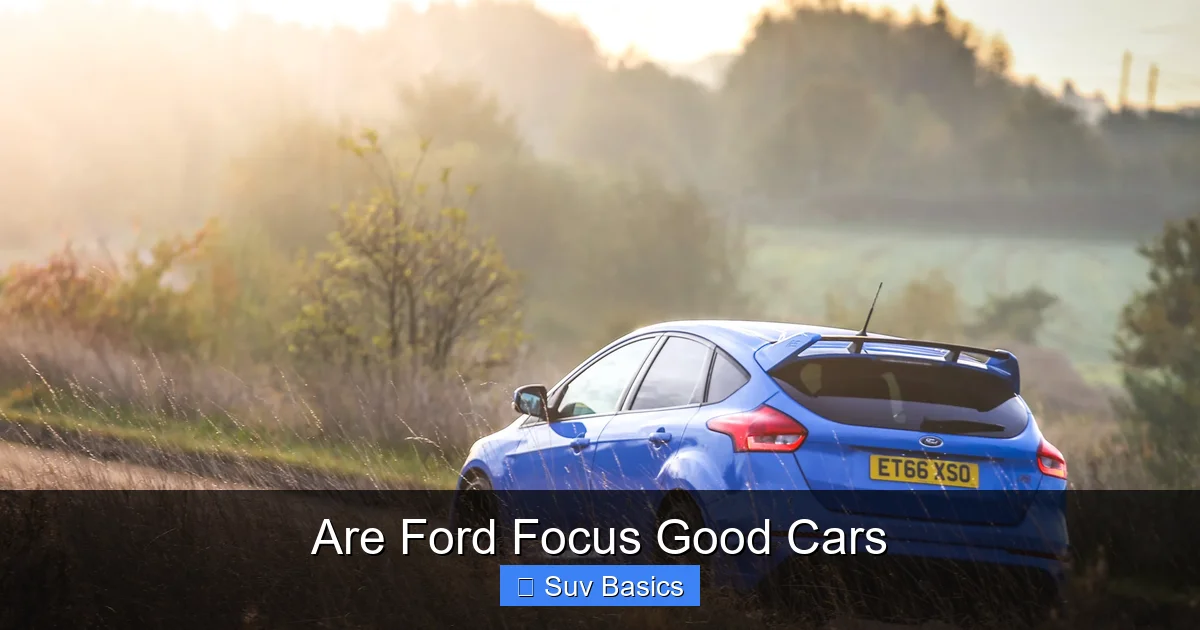
The Ford Focus is a solid compact car with strong fuel efficiency, a comfortable ride, and modern tech features. While it may not be the flashiest option, it offers great value, especially in used or certified pre-owned form. Overall, the Ford Focus is a good car for daily commuting and city driving.
Key Takeaways
- Fuel Efficiency: The Ford Focus delivers excellent gas mileage, especially with the 2.0L four-cylinder engine, making it ideal for city and highway driving.
- Affordability: With competitive pricing and low maintenance costs, the Focus offers strong value in the compact car segment.
- Comfort and Ride Quality: Known for a smooth suspension and quiet cabin, the Focus provides a comfortable ride for daily use.
- Safety Ratings: Most model years earn high marks from the IIHS and NHTSA, especially when equipped with available safety tech.
- Tech and Features: Modern trims include Apple CarPlay, Android Auto, SYNC 3 infotainment, and advanced driver aids.
- Reliability Concerns: Some automatic transmission models (especially 2012–2016) had issues, so research the specific year and transmission type.
- Discontinued but Still Relevant: Though Ford stopped U.S. production in 2018, the Focus remains a popular used car with strong resale value.
[FEATURED_IMAGE_PLACEHOLDER]
Are Ford Focus Good Cars? A Complete Review
When shopping for a reliable, affordable compact car, the Ford Focus often pops up on the list. But are Ford Focus good cars? The short answer is yes—especially if you pick the right model year and trim. Over its long production run, the Focus evolved from a basic economy car into a well-rounded vehicle with modern tech, solid fuel economy, and a comfortable ride. If you’re also considering larger vehicles, you might want to check out our guide on SUVs.
While Ford discontinued the Focus in the U.S. after 2018 to focus on SUVs and trucks, it remains a popular choice in the used car market. Many drivers still rely on their Focus for daily commutes, weekend errands, and even longer road trips. Whether you’re a first-time buyer, a student, or someone looking to downsize, the Focus offers a lot of bang for your buck—if you know what to look for.
Performance and Engine Options
The Ford Focus has offered a range of engine and transmission options over the years, giving buyers flexibility based on their needs. Most models come with a 2.0-liter four-cylinder engine that delivers around 160 horsepower. That’s plenty for city driving and highway merging, though it won’t win any drag races. The Focus ST and RS performance trims step things up with turbocharged engines, but those are less common and more expensive. For those interested in higher ground clearance, exploring SUV options might be worthwhile.
Transmission Choices: What to Know
One of the most important factors when evaluating if a Ford Focus is a good car is the transmission. Early models (2012–2016) with the PowerShift dual-clutch automatic had well-documented issues—jerking, shuddering, and even complete failures. Ford issued recalls and extended warranties, but many owners still reported problems. If you’re considering a used Focus from this era, avoid the automatic version unless it’s been fully repaired under warranty.
Instead, look for models with the traditional six-speed automatic or the five-speed manual. Manual transmissions are rare but offer better control and reliability. The manual Focus is also more fun to drive, especially in the ST trim. For most buyers, the six-speed automatic (available in later years) is the safest bet—smooth, responsive, and trouble-free.
Fuel Economy: A Strong Selling Point
One of the biggest reasons people ask, “Are Ford Focus good cars?” is because of their excellent fuel economy. The standard 2.0L engine with the six-speed automatic gets around 26 mpg in the city and 36 mpg on the highway. That’s competitive with rivals like the Honda Civic and Toyota Corolla. Even the sportier ST model manages 22 mpg city and 30 mpg highway—impressive for a performance hatchback.
If you drive mostly in the city, the Focus won’t disappoint. Its small size makes it easy to park, and the efficient engine keeps fuel costs low. Over a year of typical driving, you could save hundreds compared to larger sedans or SUVs. That’s a big win for budget-conscious buyers.
Interior Comfort and Technology
Step inside a Ford Focus, and you’ll find a cabin that’s surprisingly refined for its class. Materials are mostly hard plastic, but they’re well-assembled and durable. Higher trims like the Titanium add soft-touch surfaces, leather seats, and ambient lighting, giving the interior a more upscale feel.
Seating and Space
The Focus seats five, though rear legroom is a bit tight for taller passengers. Still, it’s adequate for short trips or families with kids. The front seats are supportive and comfortable, even on long drives. Cargo space is decent—about 13 cubic feet in the sedan and up to 24 in the hatchback with the rear seats folded. That’s enough for groceries, luggage, or a stroller.
Infotainment and Connectivity
Modern Ford Focus models (2015 and newer) come with the SYNC 3 infotainment system. It’s user-friendly, with a responsive touchscreen, voice commands, and support for Apple CarPlay and Android Auto. That means you can use your phone’s navigation, music, and messaging apps safely while driving. Earlier models had the older SYNC system, which was clunky and slow—so stick with 2015 or newer if tech is a priority. If you prefer more cargo space, you might look at an SUV hybrid instead.
Available features include a premium Sony audio system, dual-zone climate control, and a rearview camera. Some trims also offer blind-spot monitoring, lane-keeping assist, and automatic emergency braking. These aren’t standard on all models, so check the options list when shopping.
Safety Ratings and Reliability
Safety is a major concern for any car buyer, and the Ford Focus holds up well in this area. Most model years earn top or near-top ratings from the Insurance Institute for Highway Safety (IIHS) and the National Highway Traffic Safety Administration (NHTSA). The 2017 and 2018 models, for example, received a “Top Safety Pick” award from the IIHS when equipped with optional front crash prevention.
Standard and Available Safety Features
Even base models come with essentials like anti-lock brakes, stability control, and multiple airbags. Higher trims add advanced driver assistance systems (ADAS), including forward collision warning, automatic emergency braking, and lane departure warning. These features can significantly reduce the risk of accidents, especially in stop-and-go traffic.
One thing to note: the Focus doesn’t have the same level of standard safety tech as newer compact cars like the Honda Civic or Mazda3. But if you’re buying a used Focus, you can often find a well-equipped Titanium or ST model with most of the bells and whistles.
Reliability: What Owners Say
Reliability is where the Ford Focus gets mixed reviews. According to sources like Consumer Reports and J.D. Power, the Focus scores average to above average in long-term reliability—except for the problematic PowerShift automatic transmission. Once that issue is factored out, the Focus is generally dependable.
Common issues reported by owners include minor electrical glitches, wear on suspension components, and occasional HVAC problems. But these are typical for cars in this class and age. Regular maintenance—oil changes, tire rotations, brake checks—goes a long way in keeping your Focus running smoothly.
Value and Ownership Costs
One of the strongest arguments for the Ford Focus is its value. New models were always priced competitively, and used ones are now even more affordable. You can find a well-maintained 2017 or 2018 Focus for under $15,000, often with low mileage and a clean history.
Depreciation and Resale
The Focus holds its value reasonably well, especially in hatchback form. The ST and RS models are even more desirable among enthusiasts and tend to depreciate slower. That means you can buy a used Focus, drive it for a few years, and sell it without losing too much money.
Maintenance and Insurance
Maintenance costs are low compared to luxury brands. Parts are widely available, and most mechanics are familiar with Ford vehicles. Insurance is also affordable—especially for base models. The Focus isn’t classified as a high-risk vehicle, so premiums stay reasonable.
Fuel costs are another win. With 30+ mpg on the highway, you’ll spend less at the pump than with larger cars or SUVs. Over five years, that can add up to thousands in savings.
Who Should Buy a Ford Focus?
So, who is the Ford Focus best suited for? If you’re looking for a practical, fuel-efficient compact car for daily driving, the Focus is a great choice. It’s ideal for:
- Commuters: Great gas mileage and easy parking make it perfect for city driving.
- Students: Affordable price and low running costs fit tight budgets.
- First-time buyers: Simple to drive, reliable (with the right transmission), and packed with modern features.
- Small families: The hatchback offers extra cargo space for strollers, sports gear, or weekend trips.
It’s less ideal for those who need maximum cargo space, all-wheel drive, or a luxury feel. But for everyday use, the Focus delivers where it counts.
Final Verdict: Are Ford Focus Good Cars?
After weighing the pros and cons, the answer is clear: yes, the Ford Focus is a good car—especially when you choose wisely. Avoid the problematic PowerShift automatics from 2012–2016, and you’ll get a reliable, efficient, and comfortable vehicle that’s packed with value.
The Focus may not have the brand cachet of a Toyota or Honda, but it holds its own in nearly every category. It’s fun to drive (especially the ST), economical to own, and loaded with tech. Whether you’re buying new (if you find one) or used, the Focus remains a smart pick in the compact car market.
So if you’re asking, “Are Ford Focus good cars?”—the answer is a confident yes. Just do your homework, pick the right model year, and enjoy the ride.
FAQs
Are Ford Focus cars reliable?
Yes, the Ford Focus is generally reliable, especially models from 2017–2018 with the six-speed automatic transmission. Avoid early PowerShift automatics due to known issues.
What year Ford Focus is the best?
The 2017 and 2018 models are considered the best due to improved reliability, updated SYNC 3 infotainment, and strong safety ratings.
Is the Ford Focus good on gas?
Yes, the Focus gets excellent fuel economy—up to 26 mpg city and 36 mpg highway—making it one of the most efficient cars in its class.
Do Ford Focus have transmission problems?
Some models (2012–2016) with the PowerShift dual-clutch automatic had transmission issues. Later models with traditional automatics or manuals are much more reliable.
Is the Ford Focus a safe car?
Yes, most Focus models earn high safety ratings. The 2017–2018 versions received “Top Safety Pick” awards from the IIHS when equipped with optional safety tech.
Should I buy a used Ford Focus?
Yes, if you choose a well-maintained model from 2015 or later with a reliable transmission. They offer great value and low ownership costs.
This is a comprehensive guide about are ford focus good cars.
Key Takeaways
- Understanding are ford focus good cars: Provides essential knowledge
Frequently Asked Questions
What is are ford focus good cars?
are ford focus good cars is an important topic with many practical applications.