
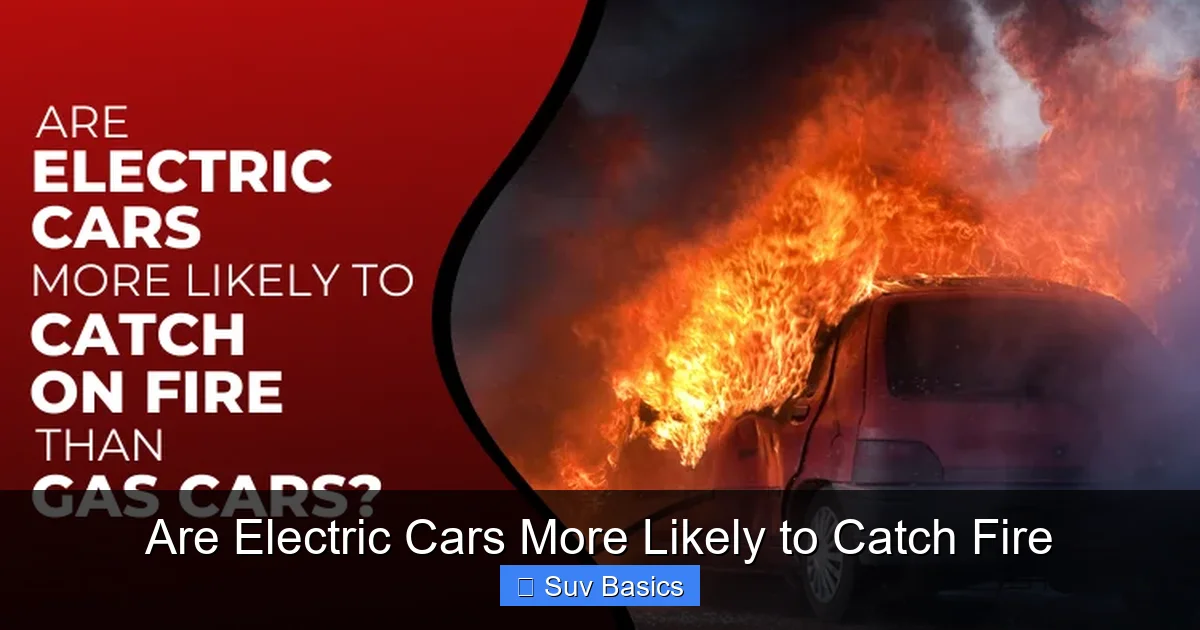
Electric cars are not more likely to catch fire than gasoline-powered vehicles—in fact, they may be safer. While EV fires get more media attention, data shows internal combustion engine (ICE) vehicles catch fire far more often. Advances in battery tech and safety standards continue to reduce risks. If you’re looking for a family-friendly vehicle, many SUVs offer excellent safety ratings as well.
Key Takeaways
- EVs catch fire less often than gas cars: Studies show gasoline vehicles are up to 20 times more likely to experience a fire than electric vehicles.
- EV fires burn hotter and faster: When lithium-ion batteries do catch fire, they burn intensely and release toxic fumes, making them harder to extinguish.
- Thermal runaway is the main risk: This chain reaction in battery cells can occur due to damage, overheating, or manufacturing defects.
- Modern EVs have strong safety systems: Battery management systems, cooling mechanisms, and crash-resistant designs help prevent fires.
- Proper charging and maintenance matter: Using certified chargers, avoiding overcharging, and regular inspections reduce fire risks.
- Emergency response is evolving: Firefighters are being trained to handle EV fires with specialized techniques and equipment.
- Misinformation spreads fear: Sensational headlines exaggerate EV fire risks, but data tells a different, safer story.
📑 Table of Contents
- Are Electric Cars More Likely to Catch Fire?
- Understanding Car Fires: Gas vs. Electric
- Why Do Electric Car Fires Happen?
- Are EV Fires More Dangerous?
- How to Reduce the Risk of an EV Fire
- The Future of EV Fire Safety
- Conclusion
Are Electric Cars More Likely to Catch Fire?
You’ve probably seen the headlines: “Electric Car Explodes in Garage!” or “Tesla Catches Fire After Crash.” These stories grab attention—and for good reason. Fire is scary, especially when it involves a high-tech vehicle packed with batteries. But here’s the truth: electric cars are not more likely to catch fire than traditional gasoline-powered cars. In fact, the data suggests the opposite.
While EV fires do happen, they are statistically rarer than fires in internal combustion engine (ICE) vehicles. Yet, because electric vehicles are newer and often associated with cutting-edge technology, any incident involving them tends to make bigger news. This creates a perception that EVs are more dangerous, even when the numbers say otherwise. So, let’s cut through the noise and look at the facts—what really causes car fires, how do EVs compare, and what can you do to stay safe?
Understanding Car Fires: Gas vs. Electric

Visual guide about Are Electric Cars More Likely to Catch Fire
Image source: milta.co
To answer whether electric cars are more likely to catch fire, we need to compare apples to apples—or in this case, batteries to gasoline tanks. Both types of vehicles can catch fire, but the causes, frequency, and behavior of those fires differ significantly. For those interested in larger vehicles, SUVs also have varying fire risk profiles worth exploring.
Gasoline is highly flammable. It evaporates easily, and even a small spark near a fuel leak can ignite a fire. In fact, gas-powered cars have multiple fire risks: fuel leaks, engine overheating, electrical shorts in older wiring, and even catalytic converter issues. According to the National Fire Protection Association (NFPA), there are over 150,000 vehicle fires in the U.S. each year—and the vast majority involve traditional cars.
Electric vehicles, on the other hand, don’t carry gallons of flammable liquid. Instead, they rely on lithium-ion batteries, which store energy chemically. These batteries are designed to be stable under normal conditions, but they can pose a fire risk if damaged, overheated, or improperly charged.
Frequency of Fires: What the Data Says
Multiple studies have analyzed vehicle fire rates. A 2023 report by AutoInsuranceEZ, using data from the Bureau of Transportation Statistics and the NFPA, found that:
– Gasoline vehicles catch fire at a rate of about 1,529 fires per 100,000 vehicles sold.
– Hybrid vehicles (which use both gas and batteries) had 3,474 fires per 100,000—higher than gas-only cars, possibly due to dual-system complexity.
– Electric vehicles had only 25 fires per 100,000 vehicles sold.
That means gas cars are over 60 times more likely to catch fire than electric cars. Even when you account for the fact that there are far more gas cars on the road, the per-vehicle risk remains significantly higher for ICE vehicles.
Another study by the Swedish Civil Contingencies Agency (MSB) found similar results: while EV fires are more challenging to extinguish, they occur far less frequently.
Why Do Electric Car Fires Happen?
Even though EV fires are rare, they do happen—and understanding why is key to preventing them. Most EV fires are linked to the lithium-ion battery pack, specifically a phenomenon called “thermal runaway.”
What Is Thermal Runaway?
Thermal runaway occurs when one battery cell overheats, causing a chain reaction that spreads to neighboring cells. This can happen due to:
– Physical damage (like a crash or puncture)
– Overcharging or faulty charging equipment
– Manufacturing defects
– Exposure to extreme heat
When thermal runaway begins, it generates intense heat—often over 1,000°F (538°C)—and can release flammable gases. Once ignited, the fire can be difficult to stop because the battery continues to feed the flames internally.
For example, in 2021, a Tesla Model S caught fire in a Texas garage after being parked. Investigators later determined the fire started due to a battery defect. While dramatic, such cases are extremely uncommon.
Common Causes of EV Fires
Beyond thermal runaway, other factors can contribute to EV fires:
– **Faulty charging:** Using uncertified or damaged chargers can overload the battery.
– **Water damage:** Submerging an EV in floodwater can short-circuit the battery.
– **Aftermarket modifications:** Tampering with the battery or electrical system increases risk.
– **Aging batteries:** Older EVs with degraded batteries may be more prone to issues.
However, it’s important to note that modern EVs come with extensive safeguards. Battery management systems (BMS) monitor temperature, voltage, and charge levels in real time. If something goes wrong, the system can shut down charging or cooling to prevent a fire.
Are EV Fires More Dangerous?
Yes—when an electric car does catch fire, it can be more intense and harder to control than a gasoline fire. But that doesn’t mean EVs are more dangerous overall. It just means the nature of the fire is different.
How EV Fires Differ from Gas Fires
Gasoline fires typically burn quickly and are easier for firefighters to extinguish with water or foam. EV fires, however, can reignite hours or even days after being put out because the battery continues to generate heat internally.
For example, in 2020, a Chevrolet Bolt caught fire in a driveway in Arizona. Firefighters extinguished it, but it reignited twice over the next 48 hours. This is why emergency responders now use specialized techniques, such as submerging the entire vehicle in water or using thermal imaging to monitor battery temperature.
Additionally, EV fires can release toxic fumes, including hydrogen fluoride and carbon monoxide. This requires firefighters to wear full protective gear and ventilate the area thoroughly.
Fire Safety in Modern EVs
Automakers are well aware of these challenges and have built multiple layers of protection into today’s EVs:
– **Battery enclosures:** Made from strong, fire-resistant materials to contain flames.
– **Cooling systems:** Liquid cooling keeps battery temperatures stable, even during fast charging.
– **Crash protection:** Batteries are placed low and centrally in the vehicle to minimize damage in a collision.
– **Automatic shutdown:** If a crash is detected, the high-voltage system shuts off instantly.
For instance, the Tesla Model Y and Ford Mustang Mach-E both feature robust battery shielding and advanced thermal management. These designs help prevent fires and protect occupants.
How to Reduce the Risk of an EV Fire
While the risk is low, there are practical steps EV owners can take to stay safe:
Use Certified Charging Equipment
Always charge your EV with manufacturer-approved chargers and cables. Avoid cheap, uncertified alternatives that may overheat or deliver unstable power. Public charging stations should also meet safety standards—look for reputable networks like Electrify America or ChargePoint.
Avoid Overcharging
Most EVs are designed to stop charging when the battery reaches 100%, but it’s still wise not to leave your car plugged in unnecessarily. Some manufacturers recommend charging to 80–90% for daily use to extend battery life and reduce stress.
Park Smart
Avoid parking your EV in direct sunlight for long periods, especially in hot climets. Extreme heat can stress the battery. If possible, park in a garage or shaded area. Also, never park over dry grass or debris—hot exhaust or battery components could ignite flammable materials.
Inspect Regularly
Check your charging port, cables, and battery for signs of damage, such as burns, swelling, or corrosion. If you notice anything unusual, contact your dealer or a certified technician immediately.
Be Prepared for Emergencies
Know what to do if your EV catches fire. Move away from the vehicle, call 911, and warn others. Do not attempt to extinguish the fire yourself—EV fires require professional handling. Keep a fire extinguisher rated for electrical fires (Class C) in your garage, just in case. Additionally, many SUV owners find that reviewing their vehicle’s safety manual helps them stay prepared.
The Future of EV Fire Safety
As electric vehicles become more common, safety standards and emergency response protocols are improving. Researchers are also developing next-generation batteries that are less prone to fire, such as solid-state batteries. These use a solid electrolyte instead of flammable liquid, significantly reducing fire risk.
Companies like Toyota and QuantumScape are investing heavily in solid-state technology, which could make EVs even safer in the coming decade. Additionally, automakers are working with fire departments to create better training programs and response guidelines.
Conclusion
So, are electric cars more likely to catch fire? The answer is a clear no. Data consistently shows that gasoline-powered vehicles are far more prone to fires than electric ones. While EV fires can be more intense and harder to extinguish, they occur much less frequently thanks to advanced safety systems and careful engineering.
The key takeaway? Electric cars are not inherently dangerous. Like any vehicle, they require proper use and maintenance. By following best practices—using certified chargers, avoiding extreme conditions, and staying informed—you can enjoy the benefits of electric driving with confidence.
As the world shifts toward cleaner transportation, understanding the real risks—and separating fact from fear—is essential. Electric cars are not just the future of driving; they’re also proving to be among the safest options on the road.
Frequently Asked Questions
Are electric cars more likely to catch fire than gas cars?
No, electric cars are actually less likely to catch fire. Studies show gasoline vehicles catch fire at a rate over 60 times higher than EVs. While EV fires get more media attention, they are statistically rarer.
What causes electric car fires?
Most EV fires are caused by thermal runaway in lithium-ion batteries, often due to physical damage, overcharging, or manufacturing defects. Faulty charging equipment and water damage can also contribute.
Are EV fires harder to put out?
Yes, EV fires burn hotter and can reignite hours later because the battery continues to generate heat. Firefighters often need specialized techniques, like submerging the vehicle, to fully extinguish them.
Can you prevent an EV fire?
You can reduce the risk by using certified chargers, avoiding overcharging, parking in safe areas, and inspecting your vehicle regularly. Modern EVs also have built-in safety systems to prevent fires.
Do EV fires release toxic fumes?
Yes, burning lithium-ion batteries can release toxic gases like hydrogen fluoride and carbon monoxide. This is why firefighters wear protective gear and ventilate the area.
Will future EVs be safer?
Yes, next-generation technologies like solid-state batteries are being developed to reduce fire risks. Automakers and emergency responders are also improving safety standards and training.