

All weather tires offer a balanced performance across multiple seasons, eliminating the need for seasonal swaps. While they’re more versatile than all-season tires, they may not match the extreme grip of dedicated winter or summer tires in harsh conditions.
Key Takeaways
- All weather tires provide year-round usability: Designed to handle dry, wet, snowy, and light icy conditions without seasonal changes.
- They carry the 3PMSF rating: This certification means they meet strict winter traction standards, unlike standard all-season tires.
- Better cold-weather performance than all-season tires: Their rubber compounds stay flexible in freezing temperatures, improving grip and safety.
- Not ideal for extreme winter or summer conditions: In heavy snow or scorching heat, dedicated winter or summer tires still outperform them.
- Convenience and cost savings over time: Avoiding seasonal tire swaps saves money on labor and storage.
- Ideal for moderate climates: Best suited for regions with mild winters and no extreme temperature swings.
- Check your vehicle manufacturer’s recommendations: Some SUVs may require specific tire types for optimal performance and warranty compliance.
📑 Table of Contents
- What Are All Weather Tires?
- Performance in Different Conditions
- Cost and Long-Term Value
- Who Should Consider All Weather Tires?
- Potential Drawbacks to Consider
- Final Verdict: Are All Weather Tires Worth It?
What Are All Weather Tires?
All weather tires are a relatively new category designed to bridge the gap between traditional all-season and dedicated winter tires. Unlike all-season tires, which are built for mild conditions and struggle in snow and ice, all weather tires are engineered to handle a broader range of temperatures and road surfaces—including light snow and slush. They’re a smart middle ground for drivers who want year-round performance without the hassle of swapping tires twice a year.
These tires are identified by the Three-Peak Mountain Snowflake (3PMSF) symbol on the sidewall, a certification that proves they meet rigorous winter traction standards set by the U.S. Tire Manufacturers Association. This sets them apart from standard all-season tires, which lack this rating. The rubber compounds in all weather tires stay flexible in cold weather, preventing the hardening that reduces grip in freezing temperatures. At the same time, they’re durable enough to handle warm summer roads without excessive wear.
How They Differ from All-Season and Winter Tires
To understand whether all weather tires are worth it, it helps to compare them to the alternatives. All-season tires are the most common type on SUVs and crossovers. They’re fine for everyday driving in moderate climates but lose effectiveness below 45°F (7°C). Their tread patterns and rubber compounds aren’t designed for snow or ice, making them unsafe in winter conditions.
Winter tires, on the other hand, are made with softer rubber and deeper, more aggressive treads to bite into snow and ice. They excel in sub-freezing temperatures but wear out quickly in warm weather and can feel sluggish on dry summer roads. That’s where all weather tires come in—they offer winter-ready performance without the seasonal limitations.
Performance in Different Conditions
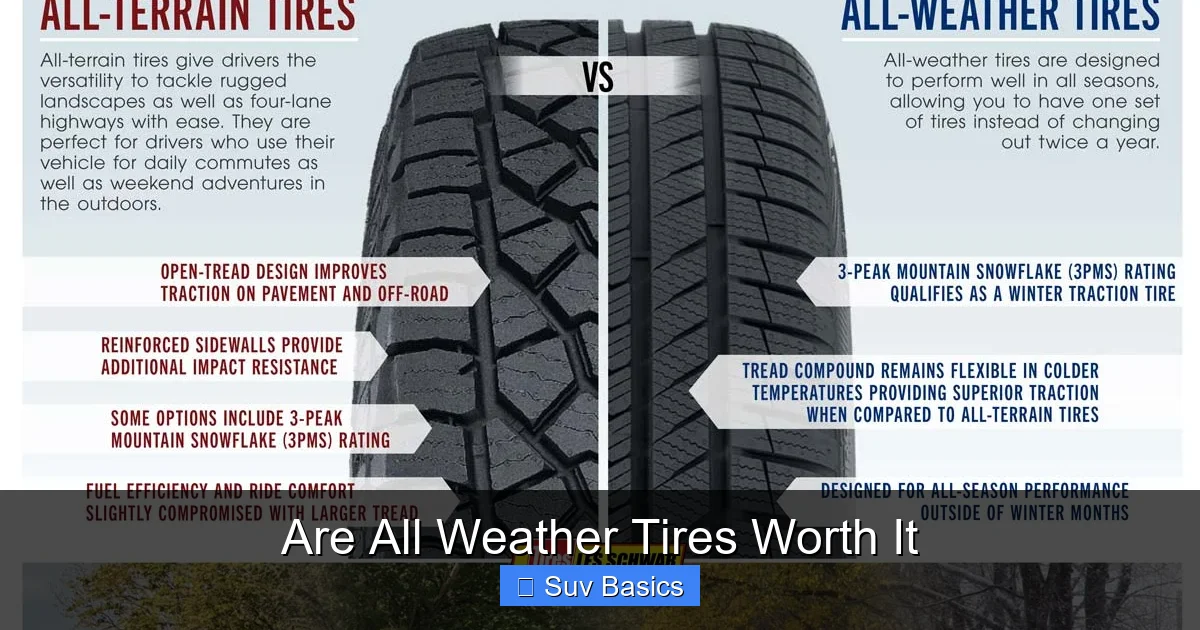
Visual guide about Are All Weather Tires Worth It
Image source: lesschwab.com
One of the biggest selling points of all weather tires is their versatility. But how do they actually perform across seasons? Let’s break it down.
Winter and Snow Performance
All weather tires shine in light to moderate snow. Thanks to their 3PMSF rating, they provide better traction, braking, and cornering on snow-covered roads than all-season tires. For example, a driver in the Pacific Northwest or the Midwest—where winters are cold but not extreme—will likely find all weather tires more than adequate. They handle packed snow and slush well, giving drivers confidence during morning commutes or weekend trips.
However, in areas with heavy snowfall, frequent ice, or sub-zero temperatures—like Minnesota or upstate New York—dedicated winter tires still offer superior control. All weather tires may struggle on steep, icy hills or during sudden snowstorms. So while they’re a big step up from all-season tires, they’re not a replacement for full winter tires in harsh climates.
Wet and Dry Road Handling
On wet roads, all weather tires perform similarly to high-quality all-season tires. Their tread designs include grooves and sipes that channel water away, reducing the risk of hydroplaning. In dry conditions, they offer responsive steering and stable handling, making them great for highway driving and city commutes.
That said, they may not deliver the same level of sporty performance as summer tires. If you enjoy spirited driving or live in a warm climate with mostly dry roads, summer tires will provide sharper cornering and better grip. But for the average SUV driver who values safety and consistency over performance, all weather tires are a solid choice.
Summer and Heat Resistance
A common concern is whether all weather tires can handle hot summer temperatures. The good news? They’re built to withstand heat without degrading quickly. Unlike winter tires, which can become too soft and wear out fast in warm weather, all weather tires maintain their integrity across a wide temperature range.
Still, in regions with consistently high temperatures—like Arizona or Texas—summer tires will offer better fuel efficiency and longer tread life. All weather tires may experience slightly higher rolling resistance, which can impact gas mileage over time. But for most drivers, this difference is minimal and outweighed by the convenience of not changing tires.
Cost and Long-Term Value
When deciding if all weather tires are worth it, cost is a major factor. Upfront, they’re typically more expensive than all-season tires—often 10% to 20% pricier. However, when you factor in the long-term savings, the value becomes clearer.
Avoiding Seasonal Tire Swaps
One of the biggest expenses with traditional winter tires is the biannual swap. Most drivers pay $100 to $200 per change, including mounting, balancing, and storage. Over five years, that’s $1,000 to $2,000 just in service fees. With all weather tires, you eliminate these costs entirely. You also save on storage space—no need to keep a second set of wheels in your garage or pay for off-site storage.
Tread Life and Durability
All weather tires are designed for longevity. Many models offer tread warranties of 60,000 to 80,000 miles, comparable to premium all-season tires. Because they’re used year-round, there’s no risk of winter tires sitting unused and degrading in storage. This consistent use helps maintain tread integrity and extends overall life.
Of course, tread life depends on driving habits, road conditions, and maintenance. Regular rotations, proper inflation, and alignment checks will help your all weather tires last as long as possible. But for the average SUV owner, they offer a strong balance of durability and performance.
Who Should Consider All Weather Tires?
All weather tires aren’t for everyone—but they’re a great fit for a wide range of drivers.
Ideal for Moderate Climates
If you live in an area with mild winters and no extreme weather, all weather tires are a no-brainer. Think cities like Denver, Portland, or Raleigh—places where snow is occasional but not constant, and temperatures rarely drop below 10°F (-12°C). In these regions, the added safety and convenience of all weather tires far outweigh the minor trade-offs.
For those looking at premium options, explore our list of Top 5 Luxury SUVs of 2024 to see which models pair well with all-weather tires.
Great for Frequent Travelers
Do you road-trip across state lines or drive through varying elevations? All weather tires give you peace of mind when you’re unsure of the conditions ahead. You won’t have to worry about getting caught in a surprise snowstorm or switching tires mid-journey. This makes them especially valuable for SUV owners who use their vehicles for family vacations, camping, or commuting between cities with different climates.
Perfect for Those Who Hate Maintenance
Let’s be honest—most of us don’t love car maintenance. All weather tires reduce the workload. No more scheduling tire changes, hauling heavy wheels, or paying for storage. Just set them once and drive confidently through all four seasons.
Potential Drawbacks to Consider
Despite their advantages, all weather tires aren’t perfect. It’s important to weigh the downsides before making a decision.
Not for Extreme Conditions
If you live in a place with heavy snow, ice, or extreme heat, all weather tires may not be enough. In Alaska or North Dakota, winter tires are still the safest choice. Similarly, in desert regions like Nevada, summer tires will offer better performance and efficiency. All weather tires are a compromise—and in extreme environments, that compromise can affect safety.
Slightly Reduced Performance in Peak Seasons
While all weather tires handle a wide range of conditions, they don’t excel in any one. Winter tires will always stop shorter on ice. Summer tires will always corner sharper on dry pavement. If you’re a performance enthusiast or face consistently harsh weather, you might notice the difference.
Availability and Fit
Not all tire brands offer all weather options, and sizes can be limited—especially for larger SUVs or off-road vehicles. You may need to shop around or consider aftermarket wheels to find the right fit. Always check compatibility with your vehicle’s make and model before purchasing.
Final Verdict: Are All Weather Tires Worth It?
So, are all weather tires worth it? For most SUV drivers, the answer is a resounding yes—especially if you live in a moderate climate, value convenience, and want reliable performance year-round. They offer a smart balance of safety, durability, and cost savings, eliminating the need for seasonal tire changes while providing better winter traction than standard all-season tires.
They’re not a magic solution for every driver, but for the majority of people who face changing weather without extreme conditions, they’re a practical and smart investment. Think of them as the “set it and forget it” option for your SUV—reliable, low-maintenance, and ready for whatever the road throws at you.
Before you buy, assess your local climate, driving habits, and vehicle needs. If you’re still unsure, talk to a trusted tire professional or read reviews for specific models on your SUV. With the right choice, all weather tires can keep you safe, save you money, and simplify your life—one season at a time.
If you’re considering an electric SUV, check out our detailed Tesla Model X Review: Innovation Meets Luxury to see how it performs with all-weather tires.
Frequently Asked Questions
Are all weather tires the same as all-season tires?
No, they’re not the same. All weather tires have the 3PMSF snowflake symbol, meaning they meet winter traction standards, while standard all-season tires do not. This makes all weather tires safer and more capable in cold and snowy conditions.
Can I use all weather tires in heavy snow?
All weather tires handle light to moderate snow well, but in heavy snow or ice, dedicated winter tires provide better grip and control. If you frequently drive in severe winter conditions, winter tires are still the safer choice.
Do all weather tires wear out faster in summer?
No, they’re designed to perform in both cold and warm temperatures. While they may have slightly higher rolling resistance than summer tires, they won’t wear out prematurely in hot weather when properly maintained.
Are all weather tires good for off-roading?
How long do all weather tires last?
Most all weather tires last between 60,000 and 80,000 miles, depending on driving habits, road conditions, and maintenance. Regular rotations and proper inflation can help extend their lifespan.
Do I need to change tire pressure with all weather tires?
No, you should maintain the recommended tire pressure year-round, as specified in your vehicle’s owner manual or door jamb. All weather tires are designed to perform well across temperature changes without pressure adjustments.