
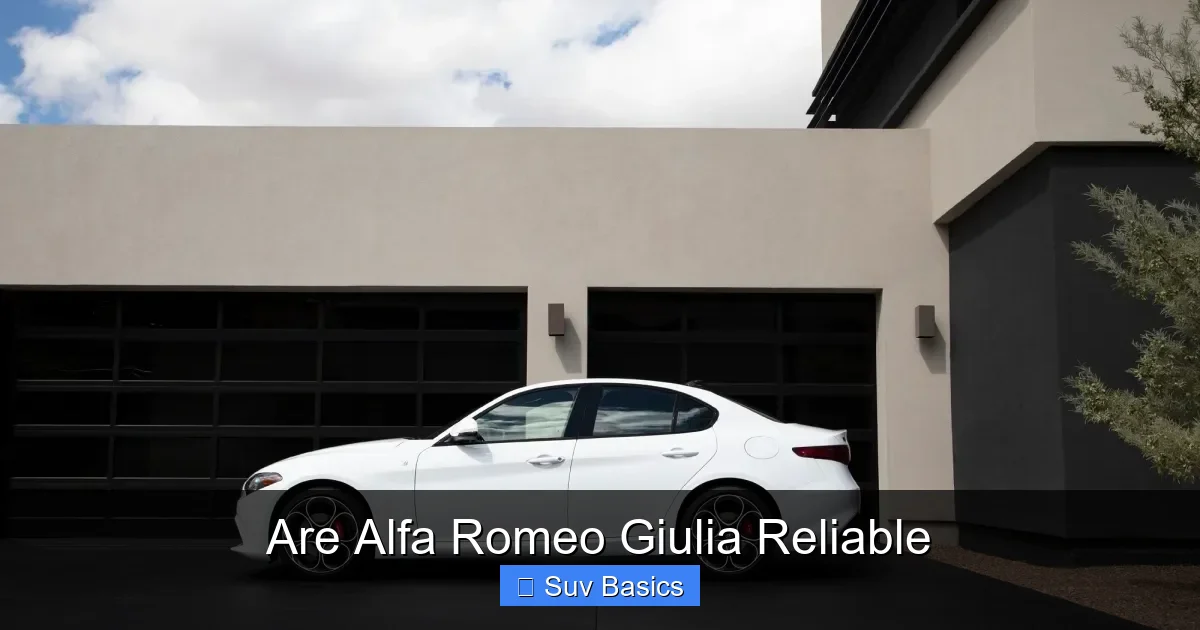
The Alfa Romeo Giulia blends Italian design with performance, but reliability has been a mixed bag. While newer models show improvement, early versions faced electrical and mechanical issues—making maintenance and model year crucial factors.
If you’re curious about SUVs and how they compare to sport sedans, see our guide to what is an SUV.
Key Takeaways
- Reliability varies by model year: Early Giulia models (2017–2019) had more reported issues, while 2020 and newer versions show marked improvement.
- Strong performance and handling: The Giulia excels in driving dynamics, offering a sporty, engaging ride that rivals German competitors. For those interested in larger family vehicles, luxury SUVs offer comparable comfort and utility.
- Electrical and infotainment glitches: Some owners report problems with the Uconnect system, sensors, and dashboard warnings.
- Regular maintenance is essential: Staying on top of scheduled service and software updates can prevent many common issues.
- Warranty and certified pre-owned programs: Alfa offers a solid warranty and CPO options that add peace of mind for buyers.
- Resale value lags behind rivals: Due to reliability concerns, the Giulia depreciates faster than BMW 3 Series or Mercedes C-Class.
- Enthusiast favorite despite flaws: Many owners love the Giulia for its style, sound, and driving feel—worth the trade-offs for some.
📑 Table of Contents
- Are Alfa Romeo Giulia Reliable? A Deep Dive into Real-World Ownership
- Reliability Ratings and Industry Insights
- Common Problems Reported by Giulia Owners
- Model Year Comparison: Which Giulia Is the Most Reliable?
- Maintenance Tips to Maximize Reliability
- Ownership Experience: What Real Owners Say
- Conclusion: Is the Alfa Romeo Giulia Reliable?
Are Alfa Romeo Giulia Reliable? A Deep Dive into Real-World Ownership
When you think of Italian cars, images of sleek designs, roaring engines, and passionate driving experiences likely come to mind. The Alfa Romeo Giulia embodies all of that—offering a stunning exterior, a driver-focused cockpit, and performance that rivals the best in its class. But beneath the glamour lies a question that keeps potential buyers up at night: Are Alfa Romeo Giulia reliable?
It’s a fair question. Alfa Romeo has a storied history, but it’s also known for inconsistency in build quality and long-term dependability. The Giulia, launched in 2016, was meant to be Alfa’s comeback sedan—competing head-to-head with the BMW 3 Series, Audi A4, and Mercedes-Benz C-Class. While it succeeded in delivering thrilling performance and head-turning style, reliability has been a sticking point for many owners and critics alike.
So, is the Giulia a risky bet or a hidden gem? The answer isn’t black and white. Reliability depends heavily on the model year, how well the car is maintained, and even where you live. In this guide, we’ll break down everything you need to know about the Giulia’s reliability, from common problems to tips for keeping your Alfa running smoothly.
Reliability Ratings and Industry Insights
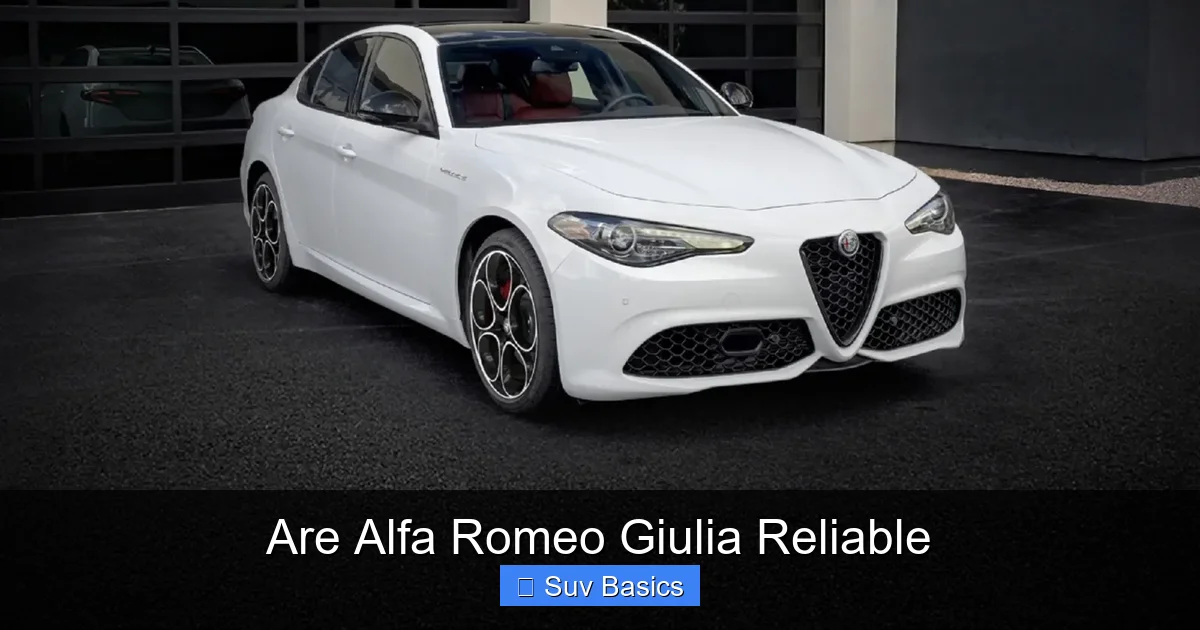
Visual guide about Are Alfa Romeo Giulia Reliable
Image source: motorbiscuit.com
When evaluating car reliability, it helps to look at what the experts say. Organizations like J.D. Power, Consumer Reports, and RepairPal provide data based on owner surveys and repair frequency.
According to J.D. Power, the Alfa Romeo Giulia has shown improvement over the years. The 2017 model scored below average in initial quality, but by 2020, it climbed to average or slightly above in some categories. Consumer Reports gives the Giulia a mixed reliability score—early models (2017–2019) received low marks, while 2020 and newer models earned “average” or “above average” ratings.
RepairPal ranks the Giulia’s reliability at 3.0 out of 5.0, which is below the luxury sedan average. They estimate an annual repair cost of around $840, higher than competitors like the BMW 3 Series ($748) and Audi A4 ($724). That said, many of these costs stem from early-model issues that have since been addressed.
What the Data Tells Us
The trend is clear: newer Giulia models are more dependable. Alfa Romeo has made significant updates to the electrical systems, infotainment software, and build quality since the car’s debut. If you’re shopping used, aiming for a 2020 or later model greatly reduces your risk.
Common Problems Reported by Giulia Owners
No car is perfect, and the Giulia is no exception. While it’s not plagued by catastrophic failures, several recurring issues have been reported by owners and mechanics.
Electrical and Infotainment Glitches
One of the most common complaints involves the Uconnect infotainment system. Owners report random reboots, unresponsive touchscreens, and Bluetooth connectivity issues. Some have even experienced false warning lights—like the tire pressure monitor flashing for no reason.
These problems are often software-related and can usually be fixed with a dealership update. However, they can be frustrating, especially when they happen frequently. In some cases, the entire infotainment unit may need replacement under warranty.
Suspension and Steering Concerns
The Giulia’s sport-tuned suspension is part of its appeal, but it can also lead to premature wear on components like control arms and bushings. Some owners report clunking noises or a loose feel in the steering, especially after hitting potholes or rough roads.
While not a safety issue, these problems can affect ride quality and may require costly repairs if left unaddressed. Regular inspections and timely replacements are key.
Transmission and Drivetrain Quirks
The Giulia uses an 8-speed ZF automatic transmission, which is generally reliable. However, some drivers have noted rough shifting, especially in cold weather or during aggressive driving. In rare cases, the transmission control module (TCM) has failed, requiring a software update or replacement.
The all-wheel-drive system (available on most trims) is solid, but a few owners have reported issues with the transfer case or differential seals leaking. Again, these are not widespread, but they’re worth noting.
Brake and Sensor Issues
Some Giulia models have had problems with the brake pedal feeling spongy or inconsistent. This is often linked to the brake-by-wire system, which can be sensitive to software glitches. Additionally, parking sensors and blind-spot monitoring systems have been known to give false alerts or stop working altogether.
These issues are typically resolved with a software update, but they can be annoying and may require multiple visits to the dealer.
Model Year Comparison: Which Giulia Is the Most Reliable?
If you’re considering a used Giulia, the model year matters—a lot.
2017–2019: The Early Years
The first-generation Giulia (2017–2019) had the most reported problems. Owners frequently cited electrical issues, infotainment bugs, and premature wear on suspension parts. While the driving experience was praised, reliability concerns led to lower resale values and higher repair costs.
That said, many of these issues were covered under warranty, and Alfa Romeo issued several technical service bulletins (TSBs) to address common faults.
2020–2023: Improved Build Quality
Starting in 2020, Alfa Romeo made significant improvements. The infotainment system was updated, electrical gremlins were reduced, and build quality tightened. These models are generally more reliable and come with better software from the factory.
The 2022 and 2023 models, in particular, have received positive feedback for reliability. They also benefit from updated safety features and a more refined ride.
2024 and Beyond: The Future Looks Brighter
The latest Giulia models continue to build on this progress. With over-the-air update capabilities (on some trims) and improved diagnostic systems, Alfa is working to stay ahead of problems before they become serious.
Maintenance Tips to Maximize Reliability
Even the best cars need care—and the Giulia is no different. Here’s how to keep your Alfa running smoothly:
For those interested in luxury rides, you might also want to explore the top 5 luxury SUVs of 2024 for alternative family options.
Stick to the Maintenance Schedule
Follow the manufacturer’s recommended service intervals religiously. This includes oil changes every 7,500–10,000 miles (depending on driving conditions), brake fluid flushes every two years, and transmission service every 60,000 miles.
Use Quality Parts and Fluids
The Giulia is a performance car, and it deserves premium care. Use full-synthetic oil, high-quality brake pads, and OEM or equivalent parts. Cheap replacements can lead to premature wear and costly repairs.
Keep Software Updated
Visit your dealer or use Alfa’s online tools to check for software updates. Many electrical and infotainment issues can be fixed with a simple flash update.
Inspect Suspension and Brakes Regularly
Given the sporty nature of the Giulia, suspension and brake components wear faster than in a typical sedan. Have them inspected during every service visit.
Consider an Extended Warranty
If you’re buying a used Giulia, especially a 2017–2019 model, an extended warranty can provide peace of mind. Alfa’s certified pre-owned (CPO) program includes a 12-month/unlimited-mile warranty with roadside assistance. For comparison, many SUV buyers also look at extended warranty options for vehicles like the Toyota Highlander Hybrid.
Ownership Experience: What Real Owners Say
If you’re interested in electric luxury SUVs, read our Tesla Model X review to see how it stacks up.
To get a true sense of reliability, it helps to hear from those who live with the car every day. If you’re also curious about how SUV owners feel about reliability, check out our evaluation of SUVs guide.
Many Giulia owners describe a love-hate relationship. “I love how it drives—it’s like a sports car in a sedan body,” says Mark, a 2021 Giulia Ti owner from California. “But I’ve had the infotainment system reboot three times in six months. It’s annoying, but not a dealbreaker.”
Others are more critical. “I had to replace the control arms at 30,000 miles,” says Sarah, a 2018 Giulia owner. “It was covered under warranty, but it took two weeks to get the parts.”
Still, many owners say the driving experience outweighs the flaws. “It’s not perfect, but it’s fun,” says James, a 2022 Giulia Veloce owner. “I’d buy another one—just maybe a newer model.”
Conclusion: Is the Alfa Romeo Giulia Reliable?
So, are Alfa Romeo Giulia reliable? The short answer: it depends.
Early models (2017–2019) had notable reliability issues, particularly with electronics and suspension. However, Alfa Romeo has made meaningful improvements in recent years. The 2020 and newer Giulia models are significantly more dependable, with fewer reported problems and better build quality.
If you’re willing to stay on top of maintenance, keep software updated, and possibly invest in an extended warranty, the Giulia can be a rewarding ownership experience. It won’t match the bulletproof reputation of a Toyota or Honda, but for driving enthusiors who value style, performance, and Italian flair, it’s a compelling choice.
Ultimately, the Giulia is a car that demands attention—but for the right owner, that’s part of the charm.
Frequently Asked Questions
Is the Alfa Romeo Giulia reliable long-term?
Long-term reliability has improved with newer models. While early Giulia years had more issues, 2020 and later versions are more dependable with proper maintenance.
What are the most common problems with the Giulia?
Common issues include infotainment glitches, electrical warnings, suspension wear, and occasional transmission hiccups—most of which are software-related and fixable.
Does the Giulia have a good warranty?
Yes, Alfa Romeo offers a 4-year/50,000-mile basic warranty and a 6-year/75,000-mile powertrain warranty, which is competitive in the luxury segment.
Is the Giulia expensive to maintain?
Maintenance costs are higher than average for a luxury sedan, averaging around $840 per year. Using quality parts and staying on schedule helps reduce long-term expenses.
Should I buy a used Giulia?
Yes, but aim for a 2020 or newer model. These have fewer reported issues and benefit from Alfa’s reliability improvements. Always get a pre-purchase inspection.
How does the Giulia compare to BMW 3 Series in reliability?
The BMW 3 Series generally scores higher in reliability ratings. However, the Giulia offers a more engaging drive and unique style, making it a trade-off some are willing to make.